In honor of the fact that this is the first movie post (sort of), this one goes to 11.
There are only 3 rules:
First, it cannot have been written for the movie (Sorry "Mrs. Robinson" from The Graduate).
Second, there must be a great scene that goes along with the usage of the song (Sorry "Misirlou" from Pulp Fiction)
Finally, the movie cannot be a concert/musical movie (Included: This Is Spinal Tap).
11. Superbad - "These Eyes" by The Guess Who
Michael Cera is awkward
I bought into a lot of hype about Superbad, and in the end, I didn't like it as much as I thought I would. Looking back, it was an OK movie for what it was trying to do, but I can name about 5 movies of that style from the past 3 or 4 years that were funnier.
Superbad had a few great moments, but all of them involved McLovin and the police officers... except for one: "These Eyes".
The Guess Who know how to write a good song, Canadian though they may be. Michael Cera cannot sing, at least he can act like he can't sing, and the idea of singing "These Eyes" a cappella to a bunch of stoners is just odd enough to be hilarious.
10. Almost Famous - "Tiny Dancer" by Elton John
Singin' in the bus
This movie has a lot of great music. However, while most of the songs set the theme in the background, this song is does more. At first, it seems like any other background song, bridging the farewell shots to the on-the-road shots. Then, one-by-one, the entire bus starts singing along. In doing this, director Cameron Crowe engages the audience, connecting the audience to the characters on the screen.
9. Love, Actually - "All You Need Is Love" by The Beatles
Just Married
This scene just keeps getting better and better. First, there's the choir. Then notSeal steps in to sing, and Chiwetel Ejiofor is all like, "Awwrgh," which I think means something like "Oh, you guys *finger point* *embarrassed smile*." Then the strings, then the brass, then the flutes, then trombones, then sax, then ELECTRIC GUITAR!
OK, so the electric guitar part was kinda corny and unnecessary. But the scene's pretty cool anyway.
8. Back to the Future - "Johnny B. Goode" by Chuck Berry
Rock 'n Roll Under the Sea
Now this is how you do electric guitar. Sure, there's a huge paradox created (How can Marty know the song if Chuck Berry knew the song because Marty went back in time and played the song that Chuck Berry wrote that Marty knew?). But for a movie that does such a great job at continuity, I'm willing to excuse that. Just a great use of the song.
7. Anchorman - "Afternoon Delight" by The Starland Vocal Band
Ron Burgundy explains love
There were way too many Will Ferrell musical moments to choose from without leaving something great out (*cough* "Dust in the Wind" *cough*), but I decided I'd impose a fourth rule allowing only one moment per actor.
"Afternoon Delight" won only because it combined the talents of Will Ferrell, Paul Rudd, Steve Carell, and David Koechner.
6. American Psycho - "Hip to Be Square" by Huey Lewis and the News
Hey Paul!
I'm a big fan of this movie, but I can't explain what makes some of the scenes in this movie so funny. It's all little nuances, especially in this scene. Maybe it's the absurdity of Patrick Bateman's obsession. Or maybe it's the way he talks or smiles or gestures. It all just works together, and for some crazy reason, "Hip to Be Square" is the perfect song to go along with it.
5. Beetlejuice - "Day O (The Banana Boat Song)" by Harry Belafonte
Best haunting ever
This song is overused and annoying.
But damn it, if it isn't funny in this context.
4. Reservoir Dogs - "Stuck in the Middle" by Stealer's Wheel
Mr. Blonde goes insane
Quentin Tarantino knows how to elevate a song from the depths and put them on a pedestal. "Stuck in the Middle" sticks out from the pack because it's such a major part of Reservoir Dogs' torture scene. You don't just remember what happened, you hear the song in your head when you think about it happening, and, sometimes, just hearing the song on its own makes your ears ache. And not because it's a bad song....
3. Apocalypse Now - "Ride of the Valkyries" by Richard Wagner
Smell of napalm, sound of Wagner
Duh Dun, duh-dun, duh, duh.
Dun, duh-dun, DUH, DUH.
Dun, duh-duh, DUH, DUH!
Duh, Duh-Duh, DUH!!!
That is all.
2. Say Anything - "In Your Eyes" by Peter Gabriel
Getcha boom box ready
The 80s are my favorite years for music, and there are a lot of great musical moments in 80s movies. Unfortunately, there are some great movie moments that don't make this list due to the rules I set. However, even if I could choose songs like "Take My Breath Away" or "Don't You (Forget About Me)" or the entire soundtrack to Scarface, "In Your Eyes" would still win. The scene is just so iconic; it's been parodied countless times. It all comes down to this, though. Admit it to yourself: you've always secretly wanted to do this. And that's why it's number 2 on the list.
1. Wayne's World - "Bohemian Rhapsody" by Queen
No, they will not let him go.
I'm sure everyone has seen this scene. If you have not, you need to re-check your movie priorities. Wayne's World may be the best Saturday Night Live movie ever made*. I'm not going to ruin things by over-analyzing this scene, but I do want to mention that they went back and changed the music video to "Bohemian Rhapsody" based on this scene.
Oh, and everyone has done this. Multiple times, probably. But without the kidnapping part.
And that's why this one is number one.
So that's it. That was much harder than I expected, even given the extra 6 spots. I hope I've inspired you to go back and watch some of these great scenes. And as for that asterisk under number 1?
*OK, so The Blues Brothers is better.
Thursday, September 25, 2008

Sunday, September 21, 2008
Top Five Immediate Impacts
Some albums take time, repeated listens, and careful attention of detail to fully appreciate. They reward with multiple listens, slowly revealing themselves for the complicated (and possibly dense) masterpieces they are. This post is not about those albums.
Instead, this post takes a look at five albums that had an immediate impact on my life from the first listen. My first assumption was that this list would be difficult to assemble based on the fact that I wouldn't necessarily remember the "first" time I listened to each and every one of the albums in my collections. Not only was this not true (I could pinpoint most of those "firsts"), but as I poured over my collection the entries in this list made themselves blatantly apparent. And so, I present to you all, my top five immediate impact albums:
5. Something/Anything by Todd Rundgren
It's one thing to create an impeccable album that runs 10-12 tracks. It's totally new ballgame when an near perfect album has 25 tracks. I remember the first time I listened to this album, I sat mesmerized for almost 90 minutes listening to every track. Though I fixated on a handful of singles (mostly on the first of the four sided album... little vinyl speak for you), I eventually came to love the entire album for all of its eccentricities and quirks. How an album could successfully weave together sing-song tunes like "The Viking Song" and "Wolfman Jack" with pseudo-blues numbers like "Black Maria" and what-the-fuck numbers like "I Went to the Mirror" and "Piss Aaron" is beyond me. But hell, it worked.
Though he went on to produce some great albums for XTC and Bad Finder (not to mention some badass guitar playing on Meat Loaf's Bat Out of Hell), Rundgren never managed another accessible masterpiece (Wizard, a True Star is arguably a masterpiece, but it landed closer to Frank Zappa than Carole King). Regardless, this album stands as a monument of song craft and production whose staying power has yet to waiver.
***
4. White Blood Cells by The White Stripes
I periodically lament that I was never witness (or at least in tune to) an important musical movement while it was happening. The one possible exception would be the garage revival of the late nineties that managed to sprout up more bands using "The" since... I don't know, forever, maybe.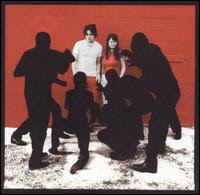 White Blood Cells is probably the record most responsible for that surge.
The first time I heard this album (on Ross' recommendation, actually), I was astounded: I had never heard anything like it in my life. I began listening to it over and over again. I was taken in by the mix of Meg's primal (albeit amateur) drumming and Jack's riffing and wailing. I honestly think I listened to "Fell in Love with Girl" fifty times a day for three months.
I couldn't believe music this good was being made in the "now". The lasting impact of this album has less to do with the Stripes (though I have bought every one of their albums since), but more importantly, it effectively broke my spell of musical education by only purchasing albums that were reputed and at least a quarter of a century old. Suck on that, Rolling Stone.
***
3. Black Star by Black Star
One sunny summer day four years ago I found myself driving my brother's car without any of my music. I decided to turn on the radio to see what CD was awaiting me (and praying it wasn't either of Andrew's staples: Dave Matthews or Dispatch). The next fifty minutes altered the course of my entire life. When the record was over, I could only think of 3 things:
1. Have I been deaf for the past 6 years?
2. I am so white.
3. And I hate John Tesh.
Ok, that's not entirely true, but the important part is that day (that album) marks a sharp turn in my music tastes. Until that point in my life, rap was relegated to a world of high school dances (which itself was tied to general awkwardness) and a black culture from which I was mostly removed. Not that this record made me "more black" or even "more attuned to black culture", but rather its mode of storytelling spoke to me.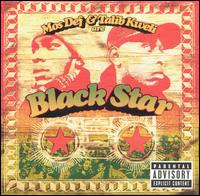 In a way, Mos Def and Talib Kwelli were weaving stories in a way that I had always loved, be it the vivid detail and emotion of Lyle Lovett or the free associational surrealism of The Fall. This record landed somewhere in between, but featured lyrical stylings the likes of which I'd never heard before (take the two-fer "Definition" and RE: DEFinition", the only glaring omission from Ross' list, as an example).
Seriously though, all mental masturbation aside, this record rocked my world and became a "gateway" album that led to an obsession over hip hop and the culture surrounding it.
***
2. Grace by Jeff Buckley
This album is the raison d'etre of this list. I only recently came across the album and, after one listen, I was flabbergasted. I mean, first this happened, then this, then this. He even covers Nina Simone... and it sounds amazing.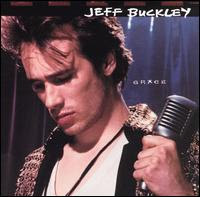 I was completely floored (keep in mind that Buckley is a white dude). While I was listening to it for the fourteenth straight time, I still couldn't get over how amazing it was... and it was then I thought to myself, "Wow, it's been a while since an album has hit me like this. I should make a list".
My first object of fixation was Buckley's voice. It's nothing short of beautiful, and to be honest, I can't think of a white guy who sings with more emotion. I imagine this to be something like what Nick Drake would've sounded like if he had sang with any emotion whatsoever.
Quick aside: what's the obsession with Nick Drake about. Seriously. I mean, for those of you who want to cry your eyes out over his mopey whisper of a voice and subtle acoustic guitar, knock yourselves out. Of course, I suppose without him we never would have had Dream Factory's elegy, "Life in a Northern Town"... so that's good, I guess.
Back to Jeff. I could on with the importance of this album. For instance, (a la Pitchfork)
[I]t's difficult to imagine Radiohead in their current guise without the eerily affecting songcraft of Grace and its argument that modern rock needn't be just another run-through of post-Nirvana dynamics.
Or I could just tell you it's amazing. The ebb and flow of the songs, the electrifying intensity that Buckley's voice holds, and the beautiful song craft involved make this album a completely moving experience.
***
1. Purple Rain by Prince
Pop albums are supposed to have an immediate impact. Their mass appeal makes for high sales. Dense, complicated albums may top critics' polls, but they never top the Billboard listing. That's how it works.
However, most of these albums get eliminated from the list of potentials because they lack staying power or because a drunk five year old was in charge of track sequencing.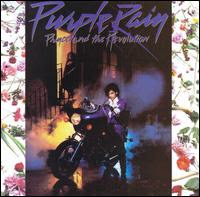 (Seriously, who was in charge of this on Thriller? It may have been a chimpanzee for all we know.)
But Prince (ah Prince)... he's a man with staying power. And the Purple One's sixth album was not only a triumph of pop music, but also one that held a remarkable amount of artistic credibility. The album is a tightly woven set of 9 songs, all of which are immediately catchy, never mind the virtuoso instrumental performances (mostly by Prince himself and most immediately apparent on the leadoff track). By the end of it you're crying, partially because it's over and partially because the lighter you've been waving through the air for the last seven or so minutes has burnt your hand. Either way, you'll never be the same. Prince may have recorded better albums, but I can't think of a single one with better hooks and riffs than this one.
A few fun facts before I leave you: Prince modeled the song "Purple Rain" after Bob Seger's work. He didn't understand why that particular kind of song was so popular, but he figured he could do it better all the same (Prince: 1, Bob: 0). Secondly, Bob Dylan was once quoted as saying that "Purple Rain" was the greatest song of the 80s. Was he doped up beyond belief? Maybe. Was he just showing some love to his Minneapolis brethren? Possibly. Was he right? Probably not, but damn if he ain't close.
***
Oh, and in case anyone actually wants to reorder their Thriller tracks on iTunes, might I suggest the following:
1. Thriller
2. Beat It
3. P.Y.T.
4. Baby Be Mine
5. Human Nature
6. Wanna Be Startin' Something
7. Billie Jean
8. The Lady in My Life
Yes, I left off "The Girl Is Mine", but that's because it's a dumb song that isn't half as good as anything else on the album (I don't care where it charted). Plus, what girl could possibly be attracted to Michael Jackson AND Paul McCartney? Or even just Michael, for that matter? See, the song doesn't even have a reason to exist. Done and done. Make it a bonus track or something.
Peace.
Instead, this post takes a look at five albums that had an immediate impact on my life from the first listen. My first assumption was that this list would be difficult to assemble based on the fact that I wouldn't necessarily remember the "first" time I listened to each and every one of the albums in my collections. Not only was this not true (I could pinpoint most of those "firsts"), but as I poured over my collection the entries in this list made themselves blatantly apparent. And so, I present to you all, my top five immediate impact albums:
5. Something/Anything by Todd Rundgren
It's one thing to create an impeccable album that runs 10-12 tracks. It's totally new ballgame when an near perfect album has 25 tracks. I remember the first time I listened to this album, I sat mesmerized for almost 90 minutes listening to every track.
 Though I fixated on a handful of singles (mostly on the first of the four sided album... little vinyl speak for you), I eventually came to love the entire album for all of its eccentricities and quirks. How an album could successfully weave together sing-song tunes like "The Viking Song" and "Wolfman Jack" with pseudo-blues numbers like "Black Maria" and what-the-fuck numbers like "I Went to the Mirror" and "Piss Aaron" is beyond me. But hell, it worked.
Though he went on to produce some great albums for XTC and Bad Finder (not to mention some badass guitar playing on Meat Loaf's Bat Out of Hell), Rundgren never managed another accessible masterpiece (Wizard, a True Star is arguably a masterpiece, but it landed closer to Frank Zappa than Carole King). Regardless, this album stands as a monument of song craft and production whose staying power has yet to waiver.
***
4. White Blood Cells by The White Stripes
I periodically lament that I was never witness (or at least in tune to) an important musical movement while it was happening. The one possible exception would be the garage revival of the late nineties that managed to sprout up more bands using "The" since... I don't know, forever, maybe.
 White Blood Cells is probably the record most responsible for that surge.
The first time I heard this album (on Ross' recommendation, actually), I was astounded: I had never heard anything like it in my life. I began listening to it over and over again. I was taken in by the mix of Meg's primal (albeit amateur) drumming and Jack's riffing and wailing. I honestly think I listened to "Fell in Love with Girl" fifty times a day for three months.
I couldn't believe music this good was being made in the "now". The lasting impact of this album has less to do with the Stripes (though I have bought every one of their albums since), but more importantly, it effectively broke my spell of musical education by only purchasing albums that were reputed and at least a quarter of a century old. Suck on that, Rolling Stone.
***
3. Black Star by Black Star
One sunny summer day four years ago I found myself driving my brother's car without any of my music. I decided to turn on the radio to see what CD was awaiting me (and praying it wasn't either of Andrew's staples: Dave Matthews or Dispatch). The next fifty minutes altered the course of my entire life. When the record was over, I could only think of 3 things:
1. Have I been deaf for the past 6 years?
2. I am so white.
3. And I hate John Tesh.
Ok, that's not entirely true, but the important part is that day (that album) marks a sharp turn in my music tastes. Until that point in my life, rap was relegated to a world of high school dances (which itself was tied to general awkwardness) and a black culture from which I was mostly removed. Not that this record made me "more black" or even "more attuned to black culture", but rather its mode of storytelling spoke to me.
 In a way, Mos Def and Talib Kwelli were weaving stories in a way that I had always loved, be it the vivid detail and emotion of Lyle Lovett or the free associational surrealism of The Fall. This record landed somewhere in between, but featured lyrical stylings the likes of which I'd never heard before (take the two-fer "Definition" and RE: DEFinition", the only glaring omission from Ross' list, as an example).
Seriously though, all mental masturbation aside, this record rocked my world and became a "gateway" album that led to an obsession over hip hop and the culture surrounding it.
***
2. Grace by Jeff Buckley
This album is the raison d'etre of this list. I only recently came across the album and, after one listen, I was flabbergasted. I mean, first this happened, then this, then this. He even covers Nina Simone... and it sounds amazing.
 I was completely floored (keep in mind that Buckley is a white dude). While I was listening to it for the fourteenth straight time, I still couldn't get over how amazing it was... and it was then I thought to myself, "Wow, it's been a while since an album has hit me like this. I should make a list".
My first object of fixation was Buckley's voice. It's nothing short of beautiful, and to be honest, I can't think of a white guy who sings with more emotion. I imagine this to be something like what Nick Drake would've sounded like if he had sang with any emotion whatsoever.
Quick aside: what's the obsession with Nick Drake about. Seriously. I mean, for those of you who want to cry your eyes out over his mopey whisper of a voice and subtle acoustic guitar, knock yourselves out. Of course, I suppose without him we never would have had Dream Factory's elegy, "Life in a Northern Town"... so that's good, I guess.
Back to Jeff. I could on with the importance of this album. For instance, (a la Pitchfork)
[I]t's difficult to imagine Radiohead in their current guise without the eerily affecting songcraft of Grace and its argument that modern rock needn't be just another run-through of post-Nirvana dynamics.
Or I could just tell you it's amazing. The ebb and flow of the songs, the electrifying intensity that Buckley's voice holds, and the beautiful song craft involved make this album a completely moving experience.
***
1. Purple Rain by Prince
Pop albums are supposed to have an immediate impact. Their mass appeal makes for high sales. Dense, complicated albums may top critics' polls, but they never top the Billboard listing. That's how it works.
However, most of these albums get eliminated from the list of potentials because they lack staying power or because a drunk five year old was in charge of track sequencing.
 (Seriously, who was in charge of this on Thriller? It may have been a chimpanzee for all we know.)
But Prince (ah Prince)... he's a man with staying power. And the Purple One's sixth album was not only a triumph of pop music, but also one that held a remarkable amount of artistic credibility. The album is a tightly woven set of 9 songs, all of which are immediately catchy, never mind the virtuoso instrumental performances (mostly by Prince himself and most immediately apparent on the leadoff track). By the end of it you're crying, partially because it's over and partially because the lighter you've been waving through the air for the last seven or so minutes has burnt your hand. Either way, you'll never be the same. Prince may have recorded better albums, but I can't think of a single one with better hooks and riffs than this one.
A few fun facts before I leave you: Prince modeled the song "Purple Rain" after Bob Seger's work. He didn't understand why that particular kind of song was so popular, but he figured he could do it better all the same (Prince: 1, Bob: 0). Secondly, Bob Dylan was once quoted as saying that "Purple Rain" was the greatest song of the 80s. Was he doped up beyond belief? Maybe. Was he just showing some love to his Minneapolis brethren? Possibly. Was he right? Probably not, but damn if he ain't close.
***
Oh, and in case anyone actually wants to reorder their Thriller tracks on iTunes, might I suggest the following:
1. Thriller
2. Beat It
3. P.Y.T.
4. Baby Be Mine
5. Human Nature
6. Wanna Be Startin' Something
7. Billie Jean
8. The Lady in My Life
Yes, I left off "The Girl Is Mine", but that's because it's a dumb song that isn't half as good as anything else on the album (I don't care where it charted). Plus, what girl could possibly be attracted to Michael Jackson AND Paul McCartney? Or even just Michael, for that matter? See, the song doesn't even have a reason to exist. Done and done. Make it a bonus track or something.
Peace.
Friday, September 19, 2008
Pitchfork Media
Just found a cool new website with music news, interviews, and lists. It's called Pitchfork Media and I've taken the liberty of placing a link for it in the "Resources" list of links to the left. Here's a sampling of some of their content. Enjoy.
100 Awesome Music Videos
Top 100 Albums of the 1990s
Top 100 Albums of the 1980s
Top 100 Albums of the 1970s
100 Awesome Music Videos
Top 100 Albums of the 1990s
Top 100 Albums of the 1980s
Top 100 Albums of the 1970s
Tuesday, September 16, 2008
My Five Rules of Music
And now, the glorious return of Top 5 Records Presents!!!
Hooraaaaaaaaaaaaaaay!
First, I'd like you to notice something. I used the word "my" for a reason. This is how I judge the merits of music. You can have entirely different criteria for how you enjoy music.
Rule 1: Lyrics should always be less important than or equally important as the music.
Or, to put it another way, greatness is not found in the lyrics. It's almost a cliche: "I listen to everything but Country and Rap." Why do these two genres constantly get derided by casual music listeners? Because most of the time, they rely primarily on what's being said instead of how it's delivered. For example, from what I've heard, mainstream Country has devolved into songs about pickup trucks. This doesn't mean that Country music fails as a genre. I've heard some great Country songs, and most of them are thematically similar. But the reason why I enjoyed those songs (e.g. Garth Brooks) rather than this is the difference in musicality. Alan Jackson's song may be dripping with nostalgia that appeals to a large proportion of the population, but that's all it will ever amount to: nostalgia.
Rule 2. Great technical skill can make any instrument worthy of music.
I've heard it so many times. I listen to a lot of music from the 80s, and when people hear that, most people think bad synthesizers. Synthesizers aren't bad instruments. They've just been given a bad rap by fly-by-night artists with little skill. A synthesizer isn't just a piano that makes funny noises. It's this, not this.
The same argument applies for sampling. There's a difference between a good sample and a bad sample, and I can prove it using the same artist: Kanye West.
Good Sample: Touch the Sky
Kanye sampled this song for "Touch the Sky" by taking the main hook and slowing it down noticeably. He took it and made it his own, unlike...
Bad Sample: Diamonds from Sierra Leone
Kanye heavily samples "Diamonds are Forever" without really distinguishing it from the source material.
To paraphrase Kanye himself, now, I ain't sayin' he's a master sampler, but I think the juxtaposition helps prove my point.
Rule 3. Too much showmanship turns music into performance art.
This is more of a personal thing for me. During the summer, Lee and I saw Peter Murphy with Ali Eskandrian as an opening act. Ali was an interesting fellow. He had a great stage presence. Emotional but natural. However, what would have been a captivating performance fell flat because it was hardly music. At one point, he basically broke into the Muslim call to prayer. He tried to make it a sexy call to prayer, but it was a call to prayer, nonetheless. It was performance art. He was acting. Not that that's bad. It's just not music.
Rule 4. All music "steals" from previous forms of music.
Led Zeppelin's debut contains very little original music. Riffs and lyrics were "influenced" by previous blues records. But you know what? I'm OK with that because they're not the first to do it and they certainly won't be the last. No music is made in a vacuum. Everything comes from somewhere else. As long as you understand this and make a point to seek out your music's influences, whether a song was stolen from somewhere else should be of little consequence.
Rule 5. Don't listen to anyone else about how to enjoy your music.
I'm no expert. Your friends are not experts. MTV, your local Clear Channel station, and Rolling Stone magazine are not experts. We're just very opinionated. You are your own expert. Love what you love. Be proud of it. And don't shy away from what you listen to. Even if it's Wham!.
Thursday, August 7, 2008
Top Five Songs Over 10 Minutes
I should start this post with a disclaimer: this list excludes live tracks, Jazz, and any other ambient/vocal-less piece. I could dedicate a much more in depth post covering Jazz, but I'll leave that honor to Mike. Enjoy.
Running Time: 13:38
"Welcome to the Pleasuredome" by Frankie Goes to Hollywood
Running Time: 11:11
"A Sailor's Life" by Fairport Convention
Running Time: 10:47
"Marquee Moon" by Television
Running Time: 10:21
"Sinnerman" by Nina Simone
Running Time: 10:11
"Station to Station" by David Bowie
Unfortunately, I was an unable to find a suitable version of any of these songs on youtube (never mind that most missed the running time by a substantial margin), so if you want to sample any of these tunes you'll have to either use your own resources, befriend me, or send me a money order for $7.12. Yeah, or you could just ask nicely.
Tuesday, August 5, 2008
Songs that send you looking for a dictionary
OK, so it's been a couple weeks. Let's get back on track.
I came up with this one while driving back from New Orleans.
"The Message" by Grandmaster Flash and The Furious Five
Lyric: "Can't stop to turn around, broke my sacroiliac"
Definition: The joint between the sacrum, at the base of the spine, and the ilium of the pelvis.
Comment: All I have to say is that's gotta hurt.
"Nemesis" by Shreikback
Lyric: "Big black nemesis, parthenogenesis"
Definition: An asexual form of reproduction found in females where growth and development of embryos or seeds occurs without fertilization by males.
Comment: I have no clue why Shreikback used this word in the song other than the fact that it's a really long word
"Girl You Have No Faith in Medicine" by The White Stripes
Lyric: "Acetaminophen, You see the medicine"
Definition: A widely-used analgesic (pain reliever) and antipyretic (fever reducer)
Comment: I'm sure every one of us has used Tylenol at some point in his or her life. Who would have thought that the official name for the drug would be used as a song lyric?
"Them and Us" by Bad Religion
Lyric: "He struggled to find a distinctive moiety"
Definition: A half; an indefinite portion, part, or share
Comment: It's not the most obscure word on this list, but Bad Religion uses so many obscure words that I almost called this post "The Bad Religion Awards". "Them and Us" is one of the best examples of this. Here's the entire chorus:
"Them and us; Lobbying determined through a mire of disbelievers. Them and us; dire perpetuation and incongruous insistence that there really is a difference between them and us"
"The Joker" by The Steve Miller Band
Lyric: "Some people call me Maurice; 'cause I speak of the pompatus of love."
Definition: ???
Comment: Apparently a mishearing of The Medallion's "The Letter" which sang "discuss the puppetutes of love". So what's a puppetute? You go look that one up. I'm tired.
Up next from me: The five rules of music I mentioned in an earlier post.
Thursday, July 24, 2008
Top Five Return-to-Form Albums
This list goes beyond, "hey they sucked for a a while, but now they've got a new album that's pretty good". No, this list attempts to find artists who were truly great when they began. Truly great. But then, for some reason or another, they lost it. Some lost their mojo, others lost their players, and some really have no excuses. Regardless, they all found a way to come back to life either by reinventing themselves or digging deeper to find that elusive piece of creative catalyst. They then formed something great. Something beautiful. Enjoy
5. Avalon by Roxy Music
Let's face it: the peak of Roxy's brilliance was the 1973 release For Your Pleasure. That was the pinnacle of the Bryan Ferry/ Brian Eno collaboration: one that melded Ferry's lounge-y charm and Eno's obsession with tape recorders. After tensions and egos got out of hand, Eno left for his own solo career. Since then, Roxy has struggled to produce work that feels focused and cohesive.
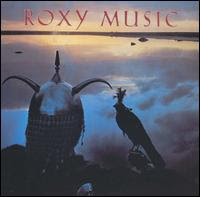 They did pull off a few great albums after the schism (namely Country Life and Siren), but in the late 70s Roxy fell off the map with a few life-less, direction-less albums, namely the abysmal Flesh+Blood. Then, in 1982, Avalon happened. Arguably the most focused and well-crafted album after Eno's departure, Avalon was Ferry showcasing his skills and passions. It was to be his perfect swan song, laying Roxy to rest at one of its highest musical peaks.
Sample track: "More Than This"
4. This Nation's Saving Grace by The Fall
Mark E. Smith is probably responsible for influencing the creation of more alternative bands than anyone this side of The Velvet Underground.The Fall started out primarily as a punk act, though Smith was never one to simply write songs depicting anger and anarchy. Instead, his approach was much more fragmentary-- in a way that sounds almost Dylan-esque. But after a handful of successful albums (leading up to the fantastic Grotesque), their music began to enter a short period of stagnancy.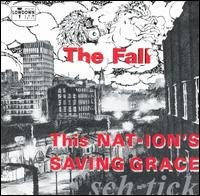 So, Mark brought in Brix Smith, his wife guitarist and singer extraordinaire, and the group started to retool it's approach with an eye towards a more pop oriented sound. After a few albums of varying success and quality, the group perfected the technique and emerged with This Nation's Saving Grace, which would garner and solidify their American cult following.The album was a wonderful pastiche of post-modern excessivism with an eye towards the partying, drug-worn, and ironic. The group would continue to make great albums (even after Brix's departure), but none would ever match the one that brought them back into the [alternative] fold.
Sample track: "Cruiser's Creek"
3. Mock Tudor by Richard Thompson
Richard Thompson's career is so full of great music that it's hard to believe that he would even have released an album that might fit this criteria. After a long, successful, and critically acclaimed career (starting with Fairport Convention then recording albums with his now ex-wife), he accepted a contract with Capital Records.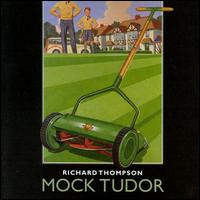 Though he recorded many great songs during his stay with them, most of his recordings from this era (most of the 90s) were lacking in a way that his work never had. However, the last album he produced under contract, Mock Tudor was a gem the likes of which his fans hadn't seen since he and Linda completed Shoot Out the Lights in 1982. Tudor wove a wonderfully complex narrative of suburban life that was almost Chaucer-like in it's presentation. The album showed that the fusing of Thompson's folk roots and remarkable songwriting skills was still capable of producing fantastic music.
Sample track: "Cooksferry Queen"
2. Mezzanine by Massive Attack
In 1991, they were visionaries. Their debut, Blue Lines, had almost single-handedly created trip-hop, a genre that celebrated the fusion of hip hop beats and British club music. Their jams were smooth, calculated pieces that would gently rise and fall in an unusually ethereal way. Despite the rush of critical and commercial success, Massive Attack became increasingly ignored over the next few years. They continued to produce work, but it often fell to the background of the trip hop scene.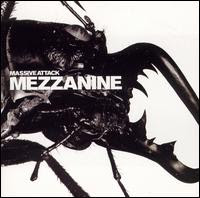 In a way, the bands they inspired into existence were threatening the very existence of Massive Attack: they were behind a curve that they had created. But all of that changed in 1998 when the group released Mezzanine. The album has a warm feeling that is remarkably contrasted by dry electronic beats and drum machines. The first four songs make for the most irresistible opening punch to one of the most original albums of it's era: "Angel", "Risingson", "Teardrop" (better known now as the theme from the tv show "House"), and the album's crescendo, "Inertia Creeps"
Sample track: "Inertia Creeps"
1. Learning to Crawl by The Pretenders
When the Pretenders hit the scene in 1980, they wowed everyone in their path. Chrysiie Hynde as the punk rocking, guiar bearing songstress with guitar virtuoso James Honeymoon-Scott backing her up. It was new wave, rock n'roll, and punk all rolled into a neat package of hooks and cynical lyrics. But when the band's sophomore effort hit the stores, everyone complained of the seeming lack of ingenuity so ever-present from their debut. Most simply wrote off the effort as a copy job and the band as a one trick pony (though the album certainly did have it's high points). But the reason this is the best Return-to-Form album ever has less to do with the band being unable to maintain the intensity of their work than their (Chryssie Hynde's) persistence. After the release of The Pretenders II, the group's bassist, Pete Farndon, was kicked out of the group due to drug abuse. Shortly thereafter, Honeymoon-Scott overdosed on cocaine. It wasn't long until Fardon did the same. Hynde, now pregnant with Ray Davies' baby, was overwhelmed and had only a drummer remaining. Two years later, a re-vamped Pretenders emerged from the ashes and released Learning to Crawl. Though perhaps not quite as consistent as their debut, Crawl showed the world that Chryssie Hynde was more than the snarling punk rocker they had fallen in love with 4 years before. The breadth of songs on this album are amazing with the highlight being perhaps their most famous tune: "Back on the Chain Gang".
Sample track: "Back on the Chain Gang"
5. Avalon by Roxy Music
Let's face it: the peak of Roxy's brilliance was the 1973 release For Your Pleasure. That was the pinnacle of the Bryan Ferry/ Brian Eno collaboration: one that melded Ferry's lounge-y charm and Eno's obsession with tape recorders. After tensions and egos got out of hand, Eno left for his own solo career. Since then, Roxy has struggled to produce work that feels focused and cohesive.
 They did pull off a few great albums after the schism (namely Country Life and Siren), but in the late 70s Roxy fell off the map with a few life-less, direction-less albums, namely the abysmal Flesh+Blood. Then, in 1982, Avalon happened. Arguably the most focused and well-crafted album after Eno's departure, Avalon was Ferry showcasing his skills and passions. It was to be his perfect swan song, laying Roxy to rest at one of its highest musical peaks.
Sample track: "More Than This"
4. This Nation's Saving Grace by The Fall
Mark E. Smith is probably responsible for influencing the creation of more alternative bands than anyone this side of The Velvet Underground.The Fall started out primarily as a punk act, though Smith was never one to simply write songs depicting anger and anarchy. Instead, his approach was much more fragmentary-- in a way that sounds almost Dylan-esque. But after a handful of successful albums (leading up to the fantastic Grotesque), their music began to enter a short period of stagnancy.
 So, Mark brought in Brix Smith, his wife guitarist and singer extraordinaire, and the group started to retool it's approach with an eye towards a more pop oriented sound. After a few albums of varying success and quality, the group perfected the technique and emerged with This Nation's Saving Grace, which would garner and solidify their American cult following.The album was a wonderful pastiche of post-modern excessivism with an eye towards the partying, drug-worn, and ironic. The group would continue to make great albums (even after Brix's departure), but none would ever match the one that brought them back into the [alternative] fold.
Sample track: "Cruiser's Creek"
3. Mock Tudor by Richard Thompson
Richard Thompson's career is so full of great music that it's hard to believe that he would even have released an album that might fit this criteria. After a long, successful, and critically acclaimed career (starting with Fairport Convention then recording albums with his now ex-wife), he accepted a contract with Capital Records.
 Though he recorded many great songs during his stay with them, most of his recordings from this era (most of the 90s) were lacking in a way that his work never had. However, the last album he produced under contract, Mock Tudor was a gem the likes of which his fans hadn't seen since he and Linda completed Shoot Out the Lights in 1982. Tudor wove a wonderfully complex narrative of suburban life that was almost Chaucer-like in it's presentation. The album showed that the fusing of Thompson's folk roots and remarkable songwriting skills was still capable of producing fantastic music.
Sample track: "Cooksferry Queen"
2. Mezzanine by Massive Attack
In 1991, they were visionaries. Their debut, Blue Lines, had almost single-handedly created trip-hop, a genre that celebrated the fusion of hip hop beats and British club music. Their jams were smooth, calculated pieces that would gently rise and fall in an unusually ethereal way. Despite the rush of critical and commercial success, Massive Attack became increasingly ignored over the next few years. They continued to produce work, but it often fell to the background of the trip hop scene.
 In a way, the bands they inspired into existence were threatening the very existence of Massive Attack: they were behind a curve that they had created. But all of that changed in 1998 when the group released Mezzanine. The album has a warm feeling that is remarkably contrasted by dry electronic beats and drum machines. The first four songs make for the most irresistible opening punch to one of the most original albums of it's era: "Angel", "Risingson", "Teardrop" (better known now as the theme from the tv show "House"), and the album's crescendo, "Inertia Creeps"
Sample track: "Inertia Creeps"
1. Learning to Crawl by The Pretenders
When the Pretenders hit the scene in 1980, they wowed everyone in their path. Chrysiie Hynde as the punk rocking, guiar bearing songstress with guitar virtuoso James Honeymoon-Scott backing her up. It was new wave, rock n'roll, and punk all rolled into a neat package of hooks and cynical lyrics. But when the band's sophomore effort hit the stores, everyone complained of the seeming lack of ingenuity so ever-present from their debut. Most simply wrote off the effort as a copy job and the band as a one trick pony (though the album certainly did have it's high points).
 But the reason this is the best Return-to-Form album ever has less to do with the band being unable to maintain the intensity of their work than their (Chryssie Hynde's) persistence. After the release of The Pretenders II, the group's bassist, Pete Farndon, was kicked out of the group due to drug abuse. Shortly thereafter, Honeymoon-Scott overdosed on cocaine. It wasn't long until Fardon did the same. Hynde, now pregnant with Ray Davies' baby, was overwhelmed and had only a drummer remaining. Two years later, a re-vamped Pretenders emerged from the ashes and released Learning to Crawl. Though perhaps not quite as consistent as their debut, Crawl showed the world that Chryssie Hynde was more than the snarling punk rocker they had fallen in love with 4 years before. The breadth of songs on this album are amazing with the highlight being perhaps their most famous tune: "Back on the Chain Gang".
Sample track: "Back on the Chain Gang"
Tuesday, July 22, 2008
Twofer Tuesday
Bands often make great albums. Freqently, those albums contain great songs. Sometimes, those great songs make it onto the radio. Rarely, a set of 2 songs are so great that they deserve to be played back-to-back. These are those songs.
I'll spare you explanations.
Queen - "We Will Rock You" and "We Are the Champions"
From News of the World
Led Zeppelin - "Heartbreaker" and "Living Loving Maid (She's Just a Woman)"
From Led Zeppelin II
The Police - "Driven to Tears" and "When the World Is Running Down, You Make the Best of What's Still Around"
From Zenyatta Mondatta
Pink Floyd - "The Happiest Days of Our Lives" and "Another Brick in the Wall (Part 2)"
From The Wall
Tears for Fears - "Broken" and "Head Over Heals/Broken"
From Songs from the Big Chair
Subscribe to:
Posts (Atom)

 Posts

